- Aladdin
- Aladdin
- 0909999999
- https://www.aladdinsourcing.com/
News

News
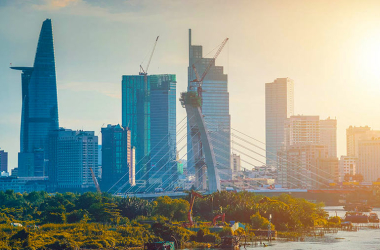
Vietnam Business Integrity Index: Enhancing Accountability and Enterprise Conduct
The Vietnam Chamber of Commerce and Industry (VCCI) has launched the Vietnam Business Integrity Index. The project, created in collaboration with the UNDP and funded by the British government, provides a toolkit for assessing the integrity and conduct of Vietnamese business. By doing this, the program’s developers hope to attract more investment and enhance the progression of Vietnamese enterprise.

Why Your Market Entry Strategy Matters in Vietnam?
When it comes to investing in Vietnam, foreign investors have been deluged with information on the prospects of the local economy in terms of the long-known indicators such as political stability, a young population, coupled with a fast-growing middle class, trade openness, and so on. These factors together contribute to Vietnam as an attractive investment destination for international businesses looking for market expansion, or supply chain diversification.

Investing in Ho Chi Minh City: Why the Megacity’s Industry, Economy and Policy Are Key to Development
Ho Chi Minh City is a key economic hub located in the heart of the Southern region of Vietnam. With a strategic position and an abundant workforce, Ho Chi Minh City, formerly Saigon, is one of the two only ASEAN cities to make it to the top 10 most dynamic cities globally. Vietnam Briefing provides an overview of Ho Chi Minh City and the major industries of this metropolis.

Closing Your Business in Vietnam: Guidelines and Procedures
Investors may choose to close their business depending on the financial situation or simply upgrading from an RO or consolidating business lines.
While most investors do not hope or expect to stop their business activities, it may take time for executives to become fully aware of the procedures and responsibilities they face when dissolving their operations.
Vietnam Briefing provides a general guideline for investors looking to close or terminate their operations in Vietnam.

How to Set Up an NGO in Vietnam
Non-government organizations (NGOs) in Vietnam are allowed to carry out development assistance and charitable activities, which are categorized as non-profit. Vietnam recently updated the legal framework for NGOs by issuing Decree No 58/2022/ND-CP. Vietnam Briefing summarizes the key elements of setting up an NGO.

Import, Export, and Investment Incentives in Vietnam
With a strategic geographical location, a competitive labor force, and a range of cost-saving factors, Vietnam is considered an attractive investment location for foreign investors. In this context, the Vietnamese government has been continually improving business conditions through reform and upgrade of investment incentives, making the country more appealing to foreign investors. We examine what foreign investors can take advantage of including the available tax and import/export incentives.


Address
Add(Vietnam): 4A Street No.6, An Lac Ward, Binh Tan Dist, HCM City, Vietnam
Add(Singapore):80 Mandai Lake Rd, Singapore 729826

Follow us
